Art has no universal value whatsoever. To the cold cosmos, painting or cinema is absolute zero once you remove the human lens. All its meaning exists solely within our perception. And yet the ability of art to deepen life, to grant a transcendent experience and to break through routine makes it truly important — important only for us, for human beings.
Sooner or later everything will disappear: we, our civilisation, and the Universe itself. The impermanence of form is made vividly clear by Tibetan monks who spend months creating intricate mandalas from coloured powder only to sweep them in an instant into a heap of sand, and by the Daoist tradition of painting with water on stone — the image exists only until the surface dries, after which it vanishes without a trace.
Everything is born from emptiness and dissolves back into it, leaving no mark — just as a human being appears in the world and one day departs. The same is true of our Universe: having come into being, it will not remain in its present form forever.
Yet the value of creation lies not only in the finished object, but also in the process itself. This is especially clear in action painting, as with Pollock. There the canvas ceases to be merely a commodity or a flat image: it becomes a field of physical encounter, a material imprint of a lived moment. Conscious control switches off. Rhythm, the sweep of the arm and the breath become more important than thought. A loss of the sense of time occurs: past and future disappear, leaving only this moment and the feeling of flow. You are no longer so much thinking about what you are doing as being inside the act itself.
The difference is only in the finale: the Tibetan sweeps away the sand, the Daoist waits for the water to dry, and Pollock leaves a frozen web of paint. But in the moment of creation they are all doing exactly the same thing — living the instant so intensely that the durability of the form ceases to matter at all.
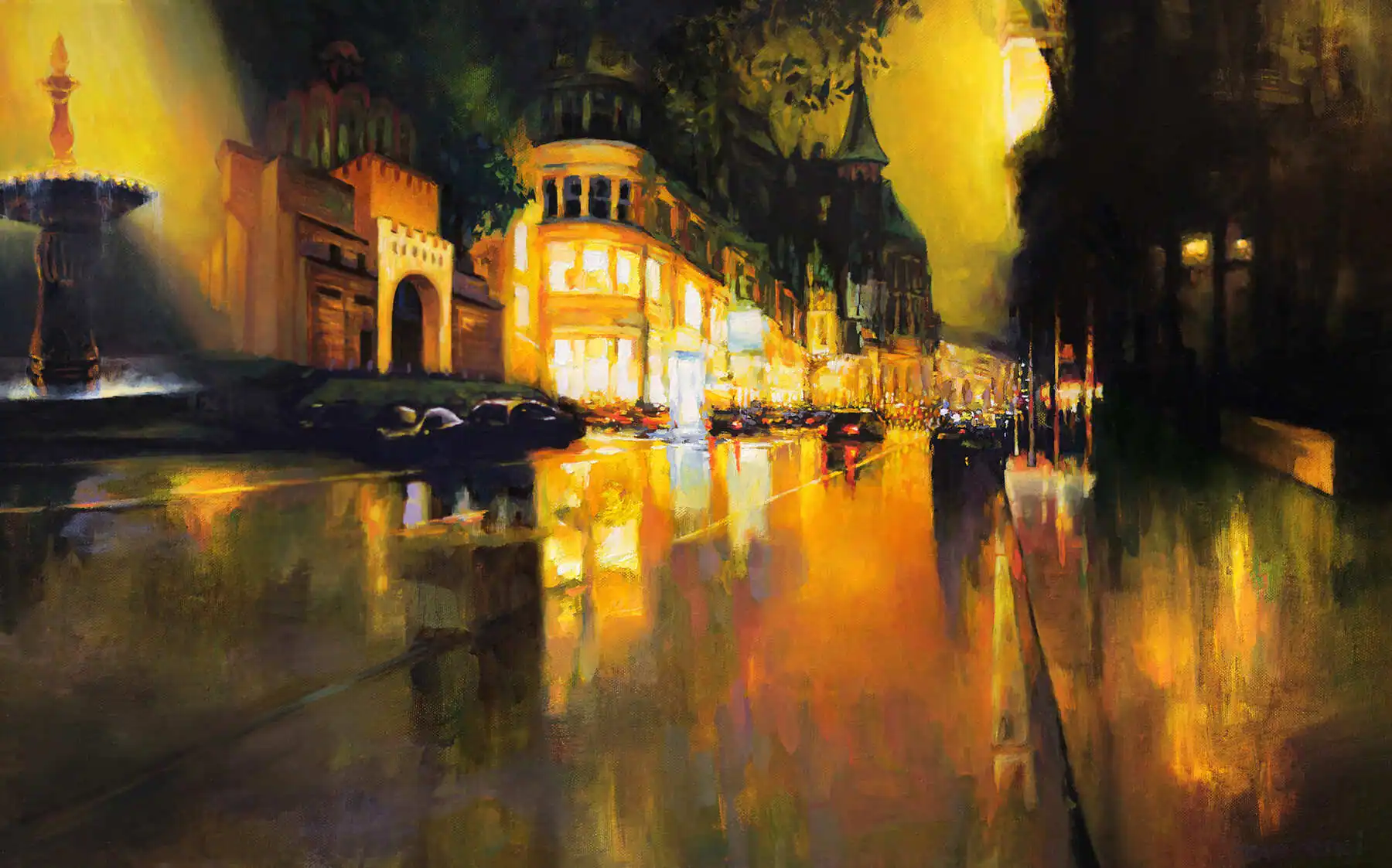
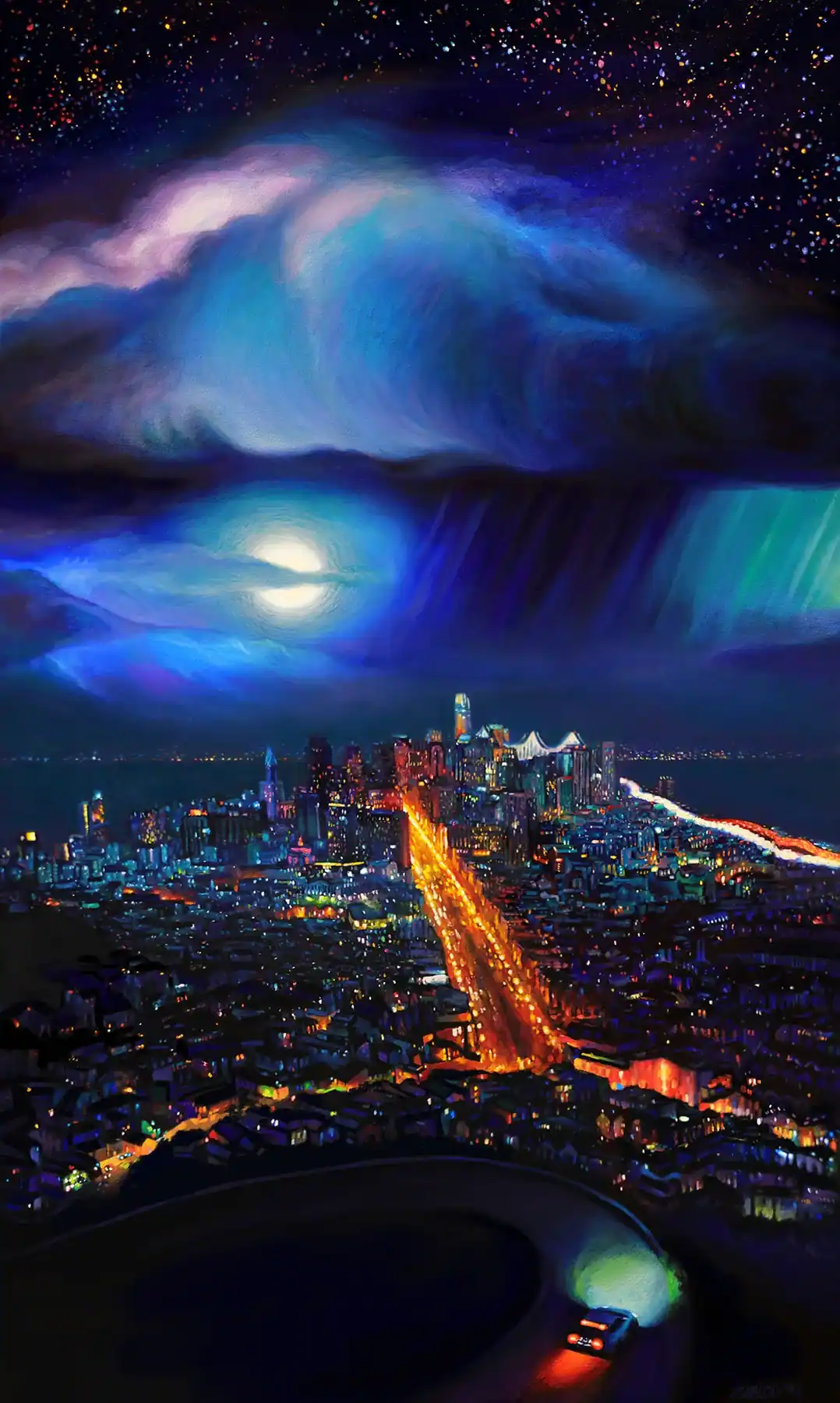
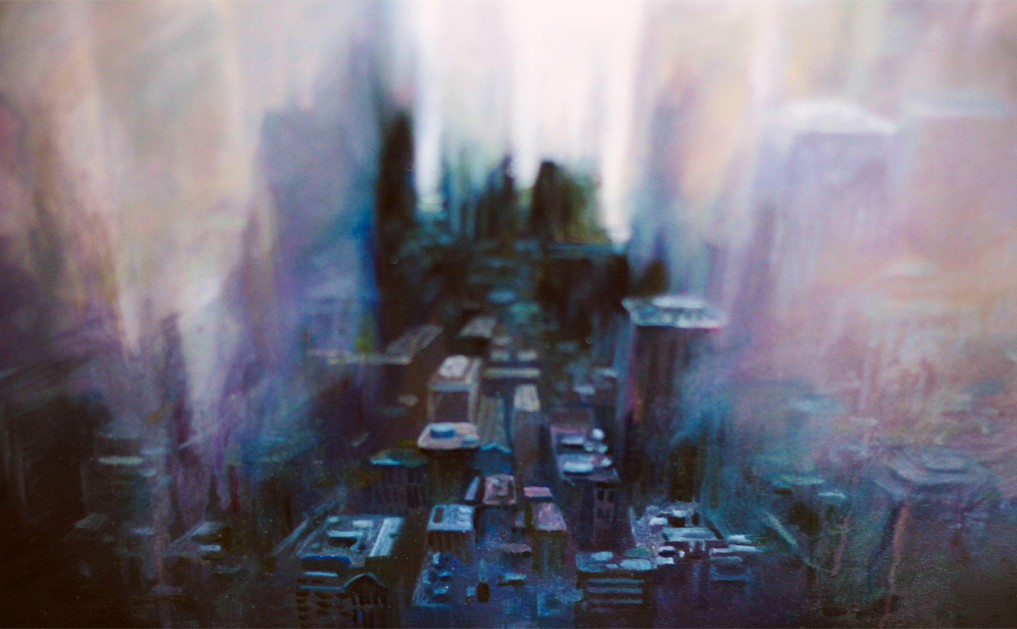
This is precisely what concerns me in working with the urban landscape. Everything around us is constantly changing, and our perception changes with it. Houses may stand for years, yet rain, snow, fog or sharp light can in seconds turn a familiar street into an entirely different place. The city is not a frozen backdrop. It lives in the moment. And my paintings try to catch exactly this elusiveness: through dynamic brushstrokes, contrasts and broken forms to convey the sensation of an instant that is already beginning to disappear.